
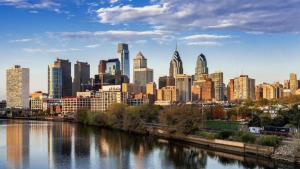


Tour Stop – Philadelphia, PA
April 25, 2026

Mayor: Cherelle L. Parker
In Philadelphia, although Black residents make up an estimated 39% of the city’s total population, in 2024 they accounted for only 28% of mortgage originations.
Mayor: Cherelle L. Parker
In Philadelphia, although Black residents make up an estimated 39% of the city’s total population, in 2024 they accounted for only 28% of mortgage originations.


Details
Mt. Airy Church of God in Christ
6401 Ogontz Ave, Philadelphia, PA 19126
Time: 10:00 AM – 1:00 PM (Doors open at 9:30 AM)


Tour Stop Programs
Each stop on the tour will feature programming that equips attendees with the knowledge and tools needed to navigate today’s housing market.
Credit Power
Learn how to boost your credit score by adding your rent history to your profile the right way. Stronger credit means more affordable paths to homeownership.
From Housing to Homeownership
Discover how Section 8 housing certificates can be used as a pathway to buying a home. Learn the steps to turn rental assistance into real ownership.
Heirs Property Rights
Learn how to secure heirs’ property rights and prevent the loss of family-owned homes. This session shows how to keep wealth and legacy in the family for generations
Renting vs. Owning: Building a Better Future
Explore the true costs of renting versus buying. This session breaks down the financial and lifestyle benefits of homeownership to help you make the best choice for your future.
Town Hall: Affordable Solutions
Join the conversation with city officials and community leaders on solutions to increase housing affordability and expand access to lending programs in your city.
Development for the People
Join with NAREB developers nationwide on partnering with cities to create community-focused developments that deliver affordable housing opportunities.
Philadelphia, Pennsylvania: Black Real Estate History & Landmarks
Philadelphia is one of the most important cities in the history of Black real estate in the United States. The city was home to one of the largest free Black populations before the Civil War and became a center for Black homeownership, property ownership, and housing activism. It also played a major role in the national movement for fair housing and the push for what became known as 'Democracy in Housing.'
Why Philadelphia Is Significant to Black Real Estate History
- Philadelphia was closely connected to the founding movement that led to the National Association of Real Estate Brokers (NAREB) in 1947, created after Black real estate professionals were excluded from the National Association of Realtors.
- Historic Black neighborhoods such as the Seventh Ward and areas of South and North Philadelphia showed early examples of Black homeownership and community wealth building in the late 1800s.
- Black churches, businesses, and civic institutions often owned land and buildings, helping create stable community anchors.
- Philadelphia was also a major battleground against discriminatory practices such as redlining, racial covenants, and mortgage discrimination.
Five Important Black Real Estate Landmarks
- Mother Bethel AME Church – Founded in 1794 by Richard Allen. It sits on one of the oldest parcels of land continuously owned by African Americans in the United States and symbolizes long term Black institutional land ownership.
- The Seventh Ward – A historic Black neighborhood documented in W.E.B. Du Bois’ 1899 study 'The Philadelphia Negro', showing strong examples of Black homeownership and economic independence.
- Opportunities Industrialization Center (OIC) – Founded by Rev. Leon H. Sullivan in 1964 on North Broad Street. OIC expanded economic opportunities and workforce development that helped many residents access stable housing and homeownership.
- Girard College Civil Rights Protest Site – A landmark of the 1960s civil rights movement where activists challenged segregation tied to education, housing, and neighborhood access.
- Cecil B. Moore Avenue Corridor – Named after civil rights leader Cecil B. Moore and located in North Philadelphia. The corridor represents the fight against discriminatory housing policies and predatory real estate practices.
Legacy
Together these landmarks represent the broader story of Black real estate in Philadelphia: early land ownership, the creation of strong Black neighborhoods, the development of economic institutions, and the continued fight for fair and equal access to housing. This legacy directly connects to modern efforts to increase Black homeownership and close the racial wealth gap across the United States.
You must be logged in to post a comment.