


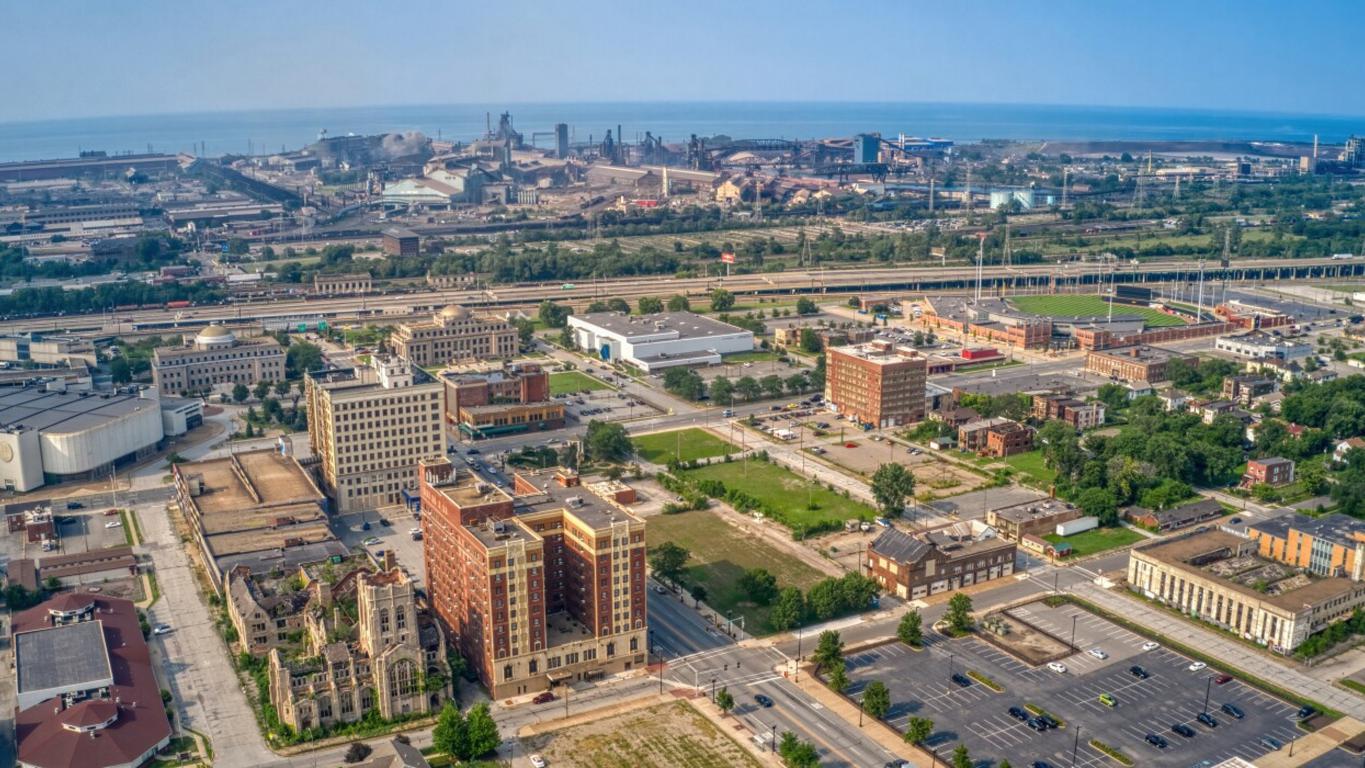

Tour Stop – Gary, IN
April 28, 2026

Mayor: Eddie D. Melton
In Gary, although Black residents make up an estimated 79% of the city’s total population, in 2024 they accounted for only 64% of mortgage originations.
Mayor: Eddie D. Melton
In Gary, although Black residents make up an estimated 79% of the city’s total population, in 2024 they accounted for only 64% of mortgage originations.


Details
Indiana University Northwest
3400 Broadway, Gary, IN 46408
Time: 6:00 PM – 8:00 PM (Doors open at 5:00 PM)


Tour Stop Programs
Each stop on the tour will feature programming that equips attendees with the knowledge and tools needed to navigate today’s housing market.
Credit Power
Learn how to boost your credit score by adding your rent history to your profile the right way. Stronger credit means more affordable paths to homeownership.
From Housing to Homeownership
Discover how Section 8 housing certificates can be used as a pathway to buying a home. Learn the steps to turn rental assistance into real ownership.
Heirs Property Rights
Learn how to secure heirs’ property rights and prevent the loss of family-owned homes. This session shows how to keep wealth and legacy in the family for generations
Renting vs. Owning: Building a Better Future
Explore the true costs of renting versus buying. This session breaks down the financial and lifestyle benefits of homeownership to help you make the best choice for your future.
Town Hall: Affordable Solutions
Join the conversation with city officials and community leaders on solutions to increase housing affordability and expand access to lending programs in your city.
Development for the People
Join with NAREB developers nationwide on partnering with cities to create community-focused developments that deliver affordable housing opportunities.
Gary, Indiana: Black Real Estate History & Landmarks
Gary, Indiana holds an important place in Black real estate history in the United States. Founded in 1906 as a major steel manufacturing city, Gary quickly became a destination for African Americans during the Great Migration who were seeking industrial jobs and opportunities for homeownership. Over time, Gary developed one of the largest Black middle-class communities in the Midwest, built largely through homeownership, business development, and community institutions.
Why Gary Is Significant to Black Real Estate History
- During the Great Migration, thousands of Black families moved to Gary for jobs at U.S. Steel and other industrial employers, creating strong Black residential neighborhoods.
- Gary became one of the first American cities to elect a Black mayor when Richard Hatcher was elected in 1967, signaling political and economic influence within the city.
- Black professionals, steel workers, and entrepreneurs built stable communities through homeownership in neighborhoods across Gary.
- The city became an example of both Black middle-class growth through property ownership and the later economic challenges that affected many industrial cities.
Five Important Black Real Estate Landmarks
- Midtown Gary Neighborhood – One of the historic centers of Gary's Black residential life, where many families established long-term homeownership during the mid-20th century.
- Genesis Convention Center Area – Located downtown, this area became a hub of civic activity, political gatherings, and economic development tied to the city's Black leadership.
- Roosevelt High School Neighborhood – A historic community anchor surrounded by residential areas where many Black families built generational stability through homeownership.
- City Methodist Church District – Once one of the largest Methodist congregations in the Midwest, the surrounding area reflected Gary's early economic prosperity and residential development.
- Jackson Family Home Area – Located on Jackson Street, this neighborhood represents the working-class Black communities that formed through industrial employment and homeownership in Gary.
Legacy
Gary's history illustrates the role that industrial opportunity, homeownership, and community institutions played in building Black middle-class neighborhoods in the Midwest. While the city experienced economic decline following the loss of industrial jobs, Gary remains an important example of how real estate, employment, and political leadership intersected to shape Black wealth building and community development.
```
You must be logged in to post a comment.